


PRIS Takeaways: Neurodivergence in Payroll
 Lukas Montgomery
Payroll has long been seen as a profession that values structure, deadlines and precision. But what happens when the people behind the process think and work differently?


In our most recent Payroll & Reward Insight session, industry consultant Simon Bradbury, Global Payroll Project Expert & Founder at Global HR, and host Vickie Graham, Managing Director at Reward Strategy, led an open and honest discussion about neurodiversity in payroll teams -sharing lived experiences, practical adjustments, and what inclusive leadership really looks like in practice.
Understanding Neurodivergence in the Payroll Profession
Simon was formally diagnosed with ADHD in September 2024 and autism shortly afterwards. He described the experience as “a double-edged sword” with relief at understanding himself better, but also the reality of learning how to live and work authentically after years of masking.
One powerful reminder from the session was that ADHD is not simply a deficit of attention. It is more accurately a dysregulation of attention, often including intense periods of hyperfocus.
For many in payroll, this resonates strongly. Traits such as heightened focus, a strong responsiveness to urgency, comfort with structured cycles, and an interest in complex problem-solving can align closely with the demands of payroll work. However, these strengths can coexist with challenges that are frequently misunderstood.
The Power of Accommodations (Not Allowances)
A key theme throughout the discussion was the importance of accommodations rather than “allowances.” Neurodivergent individuals may take language very literally, struggle when plans change suddenly, experience physical discomfort when faced with particularly boring tasks, find traditional time structures difficult to manage, or experience hyperfocus and feel disrupted when interrupted. None of these traits represent a lack of capability; they simply reflect different ways of processing information and managing energy.
One practical example shared during the session was the idea of a personal “one-pager”. This is an instruction manual explaining how someone prefers to receive feedback, what triggers stress or overwhelm, their communication preferences, and how colleagues can best support them. This simple tool can remove guesswork and create clarity for both managers and teams, reducing friction and increasing mutual understanding.
Time Management: Rethinking “On Time”
Traditional workplace norms often treat punctuality as a performance measure. However, several participants shared how fixed start times had historically been misinterpreted as poor performance or laziness. In reality, some people with ADHD struggle with time perception and transitioning between tasks. Flexible start windows, such as allowing employees to begin work between 8am and 10am, can dramatically improve consistency without negatively affecting performance. In many cases, output quality remains strong and can even improve.
Simon emphasised the importance of shifting the leadership mindset. If someone is completing their work to a high standard and meeting deadlines, the focus should be on the quality and timeliness of the output rather than on exactly how or when the work was completed. Moving from optics to outcomes can make a significant difference.
Hyperfocus and Productivity Patterns
Some neurodivergent professionals may feel overwhelmed in the morning yet complete a full day’s work in a concentrated few hours later in the day. Others may work better in the evenings rather than early mornings or require multiple/ specific reminders to manage commitments effectively. From the outside, this variability can appear inconsistent. In practice, it can result in exceptional productivity and problem-solving ability.
Understanding and accepting these patterns reduces unfair performance judgments and helps organisations retain high-performing talent.
The Emotional Cost of Masking
Several participants shared experiences of exhaustion after office days, conferences, or high-social environments. Masking, the effort to appear neurotypical, can lead to headaches, emotional fatigue, sleep disruption, and increased anxiety.
Hybrid working models have helped many individuals manage this better by reducing constant social exposure. This is a factor we take seriously at Reward Strategy and caused the introduction of sensory rooms at some of our events, to allow attendees space to decompress when needed.
These adjustments may appear small, but their impact on wellbeing and performance can be significant.
Performance Management: Moving Beyond One-Size-Fits-All
Instead of focusing solely on measures such as time spent at a desk, punctuality, or linear productivity throughout the day, Simon suggested linking performance more closely to company values, innovation, accountability, and quality of output. For example, someone who struggles with punctuality may be exceptionally innovative or highly effective in problem-solving. Measuring performance strictly against rigid behavioural norms risks overlooking genuine contribution and value.
Embedding company values into performance conversations can create a fairer and more inclusive framework for both neurodivergent and neurotypical employees.
Leadership Confidence and the Biggest Barrier
A live poll during the session revealed that the biggest barrier to neurodiversity inclusion is lack of leadership awareness, with stigma and fear of disclosure following closely behind.
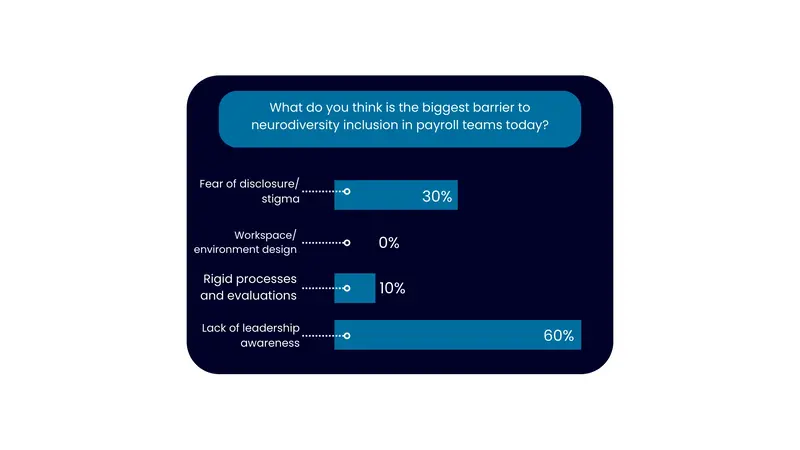
This highlights a critical point: creating a safe environment for disclosure cannot sit solely with payroll or HR teams. It requires visible leadership buy-in at senior levels. Education, whether through podcasts, social content, formal learning modules or lived experience panels, was repeatedly cited as the most important starting point.
As awareness increases, confidence in supporting neurodivergent colleagues naturally improves.
Creating Psychological Safety
Many employees hesitate to disclose neurodivergence, despite legal protections under equality legislation. To build trust, organisations need to provide clear education on neurodivergence, encourage open conversations, visibly signal allyship, and reassure employees that disclosure will not result in adverse consequences.
Sometimes, simply asking how someone prefers to receive feedback can open the door to meaningful dialogue and tailored support.
Psychological safety does not emerge automatically; it is built through consistent, inclusive behaviours.
Practical Takeaways for Payroll Leaders
The session closed with a strong consensus on the final poll: inclusion does not require radical overhaul, but it does require intentional change.
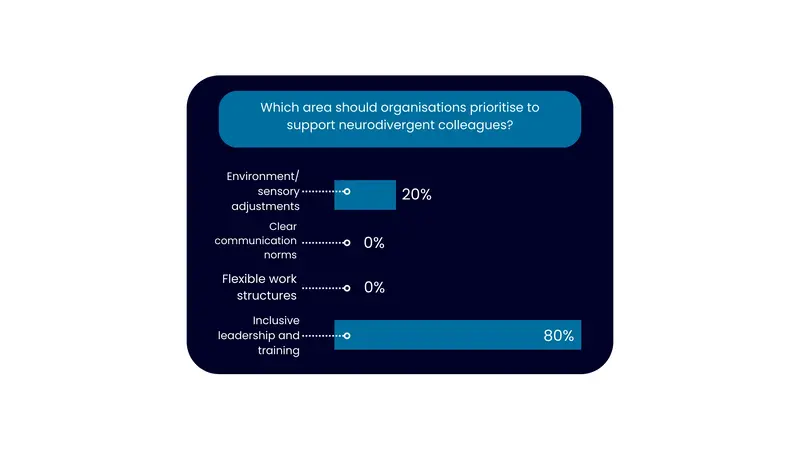
Payroll and reward leaders can prioritise leadership education on neurodiversity, focus performance reviews on outputs and values rather than rigid behavioural norms, introduce flexible start times where possible, encourage the use of personal communication guides or one-pagers, create safe and stigma-free channels for disclosure, and recognise that consistency may look different for different brains.
These steps are both practical and achievable and they can significantly improve engagement and retention.
Final Reflection
Perhaps the most powerful message from the session came from Simon’s description of diagnosis: “I realised I’m not broken”.
Neurodivergence is not a flaw to be managed out of the system. In many payroll environments, it is already contributing to precision, innovation, and resilience.
The challenge now is ensuring that organisational structures, leadership styles and evaluation methods allow those strengths to thrive.
Looking to improve your organisations DE&I? Click here to visit the Knowledge Hub and see the latest industry insights and evolutions

The latest Payroll & Reward news in your inbox
Permission Statement





Did you find our website useful?
Thank you for your input
Thank you for your feedback
